Deacon Brodies Tavern
Also known as Deacon Brodie’s Tavern
A literary-legend pub with a remarkably intact Old Town façade, where Stevenson’s Brodie connection needs a careful telling.
Edinburgh’s pubs have served as meeting rooms, debating chambers, performance spaces, fictional settings and sources of inspiration. This collection makes the nature of each connection plain: documented links sit beside imaginative works, commemorative names and carefully caveated venue traditions.
Read the connection labels and evidence notes in each story: association, commemoration and a documented visit are different claims.
A writer’s documented visit, a pub appearing in fiction and a bar named after an author each tell a different story. The connection labels in the venue entries explain which kind you are looking at.
Compare the Oxford Bar’s Rebus connections, Milnes Bar’s literary associations and the White Hart Inn’s first-person traces. The writers’ route connects selected stops; the collection lets you read and choose at your own pace.
Choose nearest-to-me to compare distances. Location is optional and is requested only when you tap the button.

Also known as Deacon Brodie’s Tavern
A literary-legend pub with a remarkably intact Old Town façade, where Stevenson’s Brodie connection needs a careful telling.

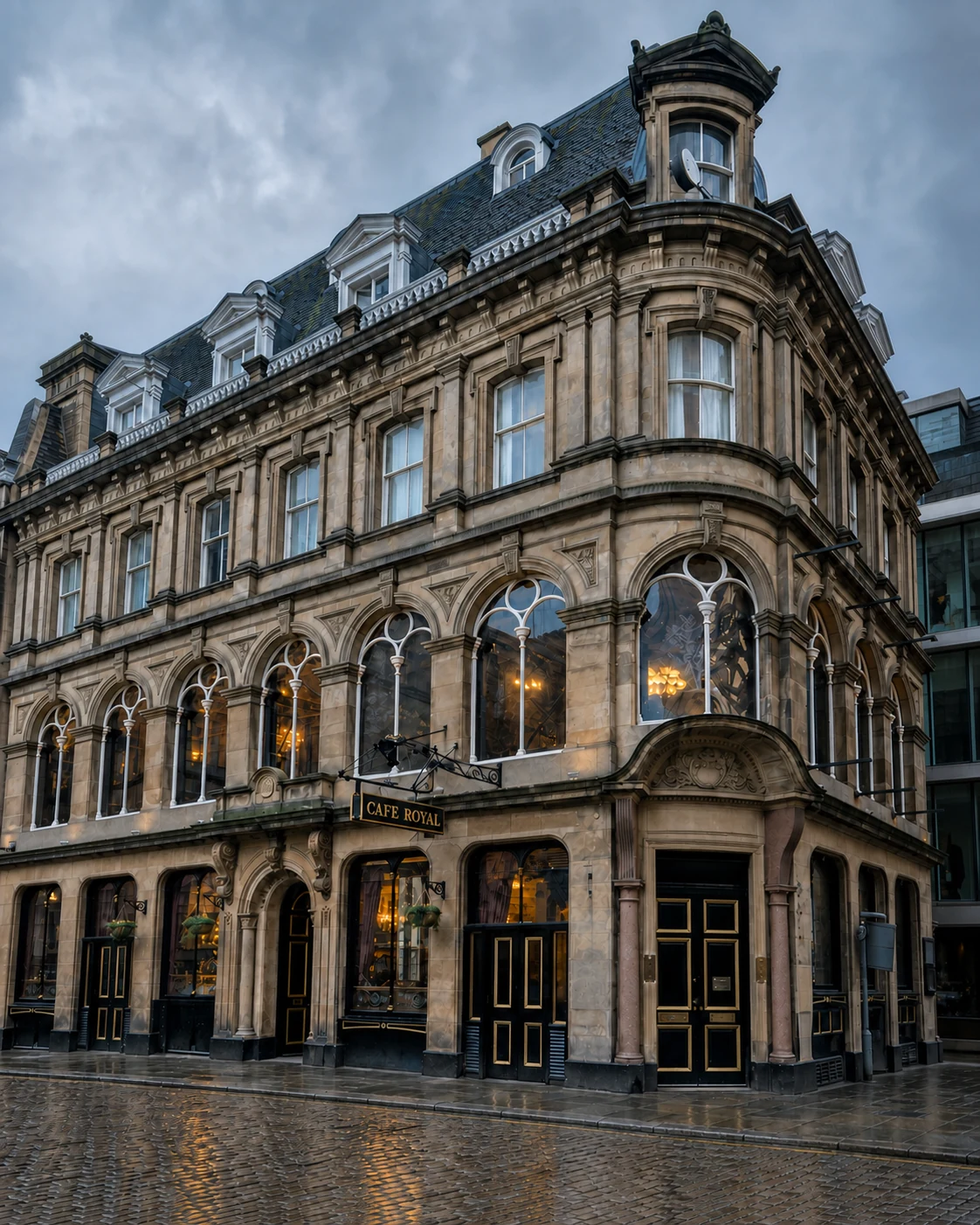
Also known as Cafe Royal
Planned as a gas-fitting showroom, the 1861 building was Café Royal Hotel by 1863; its 1900-01 scheme incorporated Doulton inventor panels and, in the Oyster Bar, eight stained-glass sports windows.

Also known as The Abbotsford
At 3-5 Rose Street, a 1902 Henderson pub preserves a mahogany island servery beneath a compartmented Jacobean Revival ceiling.

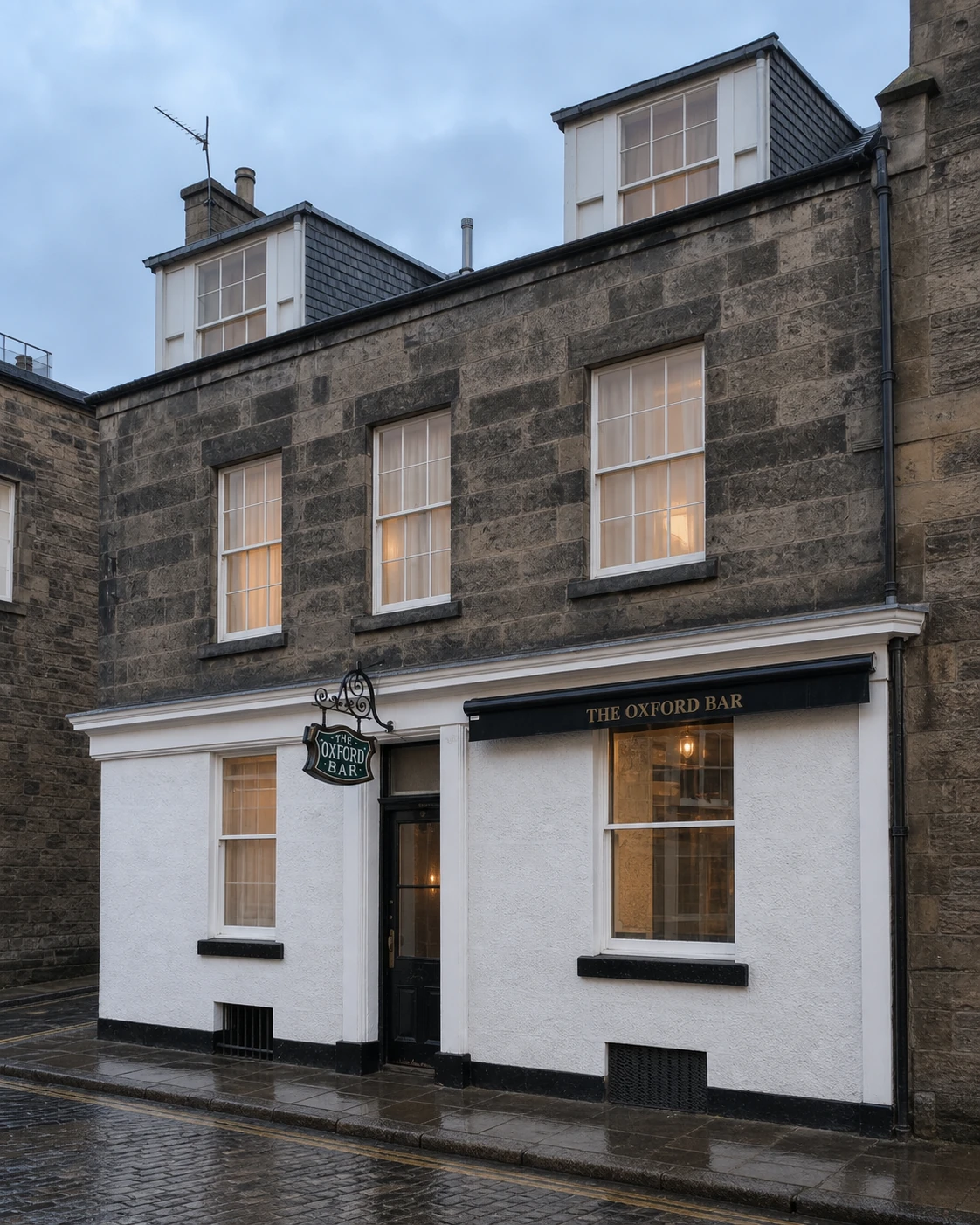
Behind a late-eighteenth-century New Town façade, a tiny compartmented bar preserves a late-nineteenth-century counter, a possibly late-nineteenth-century mirrored gantry and the modern literary world of Rebus.

Also known as Forrest Hill Bar
In Old Town, Sandy Bell's occupies the public-house ground floor within the Category C listed 7-25 Forrest Road range, with a CAMRA two-star interior and a session tradition independently anchored by 1961.

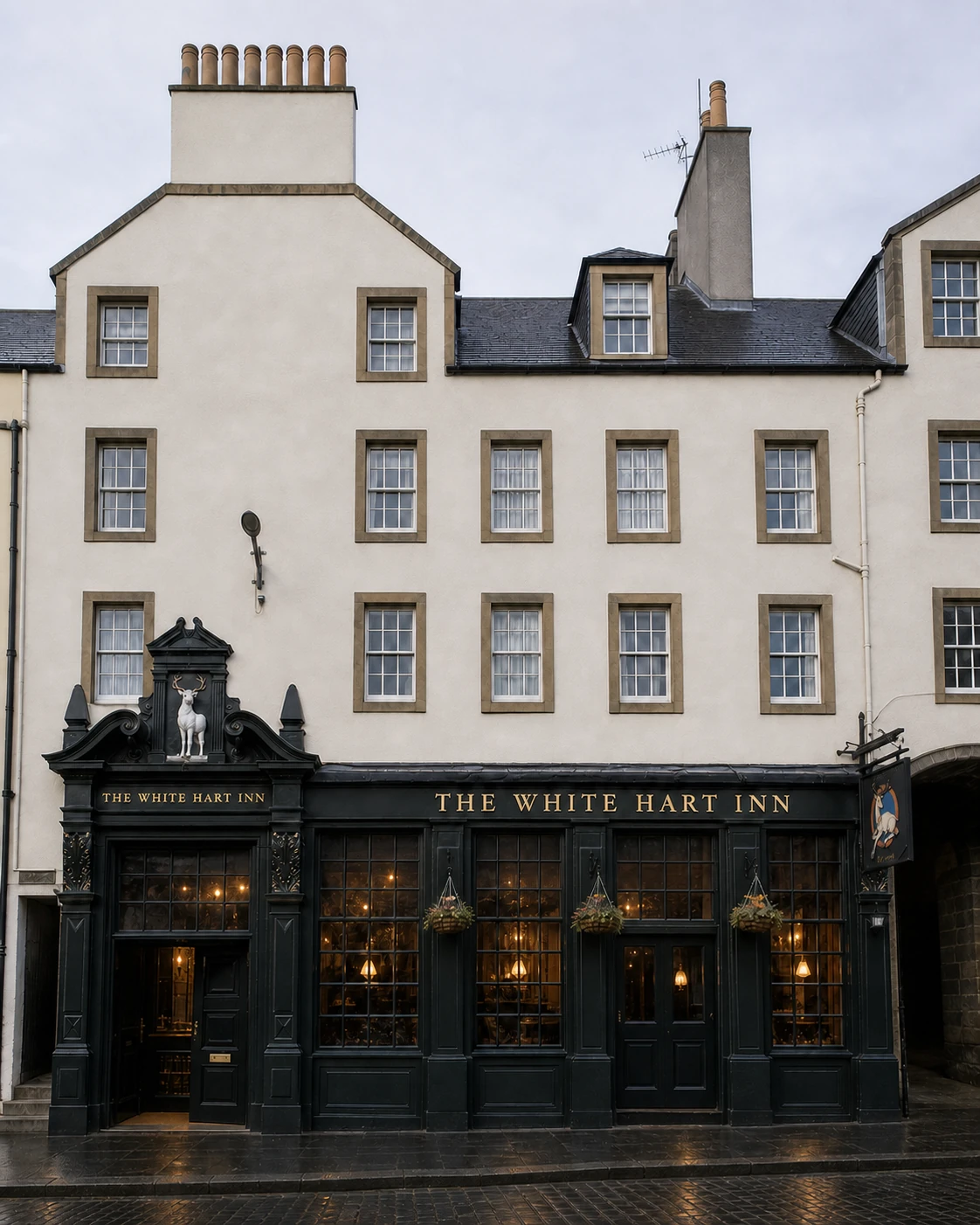
Also known as The White Hart
A c.1740 listed Grassmarket inn whose 1516 tradition sits beside first-person traces from Robert Burns and Dorothy Wordsworth.

A literary pub named not for a resident drinker but for Sir Arthur Conan Doyle, born nearby at Picardy Place in 1859.

Also known as Milne’s Bar / Milnes of Rose Street
Rose Street’s literary landmark: a corner pub where the Scottish Renaissance poets, artists and their arguments found a home.

Also known as Kenilworth Bar
A Category A-listed Victorian drinking room: carved mahogany, Minton tiles, stained glass and a monumental Drybrough’s mirror.