'%20d='M32%203C16.4%203%206%2015.3%206%2031.2c0%2010.9%206.6%2020.1%2014.3%2026.2L32%2077l11.7-19.6C51.4%2051.3%2058%2042.1%2058%2031.2%2058%2015.3%2047.6%203%2032%203Zm0%2014c-8.8%200-14.5%207-14.5%2016.4V55h29V33.4C46.5%2024%2040.8%2017%2032%2017Z'/%3e%3cpath%20fill='%23C99B4A'%20d='m27.5%2055%204.5-24%204.5%2024h-9Z'/%3e%3c/svg%3e)
The pub’s story
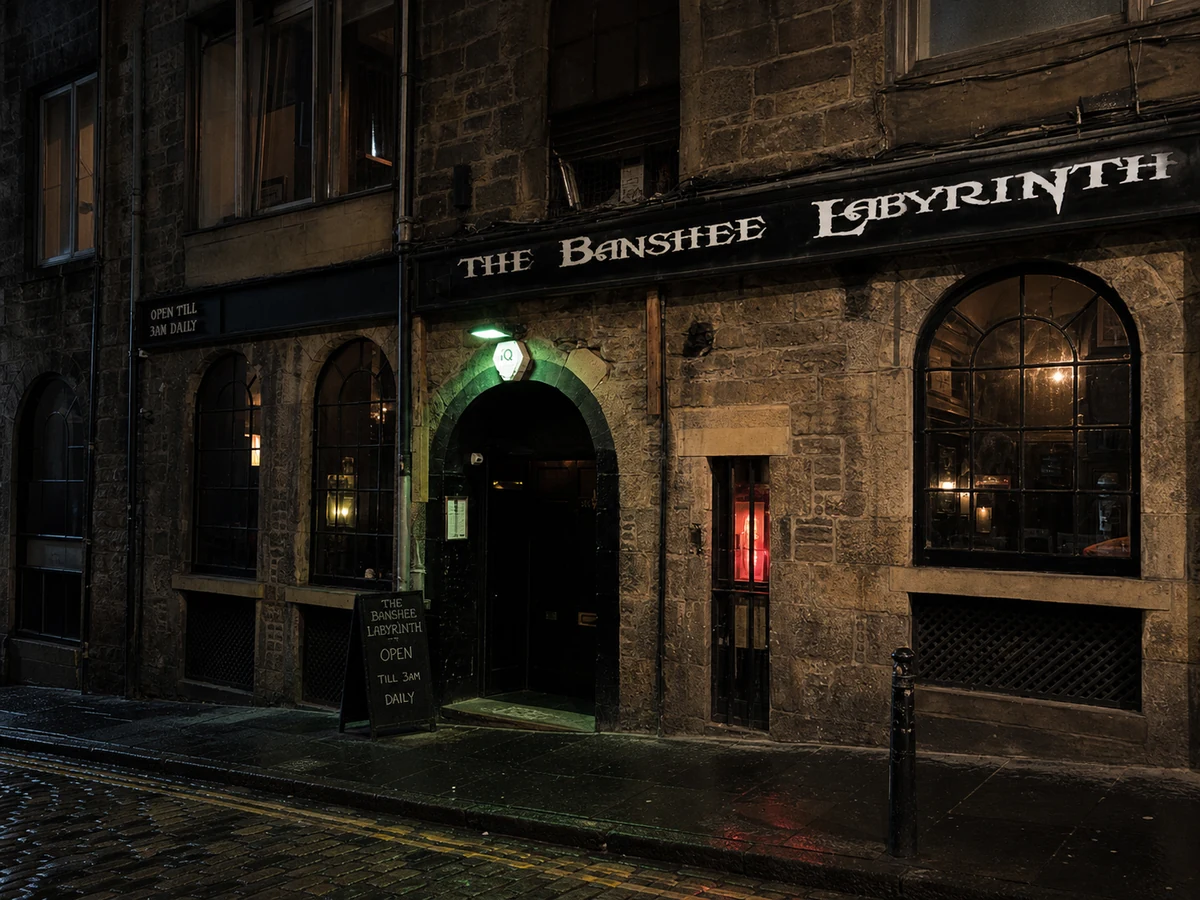
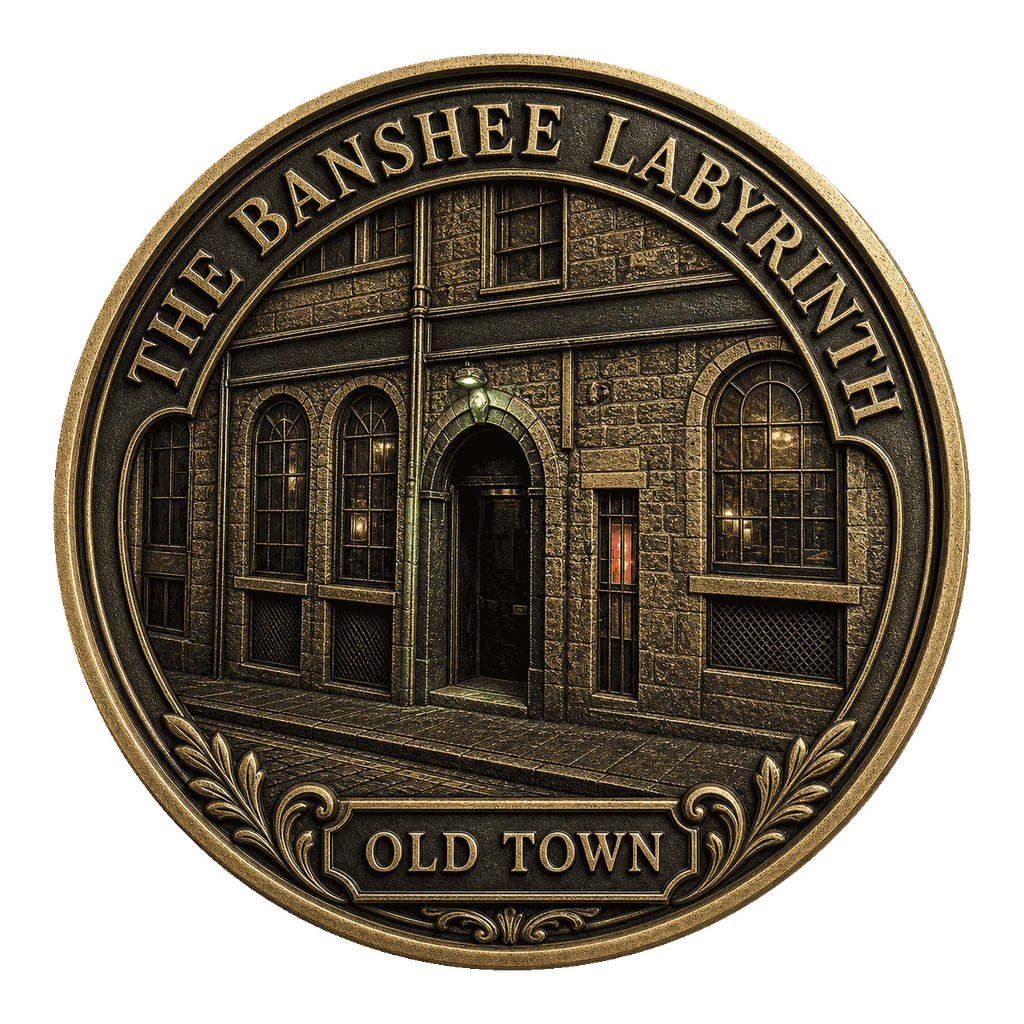
The Banshee Labyrinth is an alternative after-dark venue spread through bars, live-music rooms, karaoke and cinema spaces below Niddry Street. Its identity depends on actual below-street vaults, but the historical claims need sorting carefully. Historic Environment Scotland confirms that the wider South Bridge/Niddry Street group includes access to vaults below street level; it does not prove every story the Banshee attaches to its particular rooms. The operator’s account of the 1788 bridge opening, the 1824 Great Fire, filled vaults and ghosts is therefore treated as house narrative unless independently evidenced. One useful fixed point is 2014, when an independent pub chronicler recorded the Banshee built into the old South Bridge vaults. The operator now describes roughly fifteen years of trading. It is a real maze of public rooms with a strong music programme; its haunting and curse material is atmosphere, not archive.
What to notice
- 01
Follow the shifts in level and room size. The physical vaults are the source of the venue’s genuinely labyrinthine feel.
- 02
Live, karaoke and cinema spaces have different atmospheres; check the night’s programme rather than assuming one room represents the whole venue.
- 03
Enjoy the banshee, curse and ghost stories as house lore; the historic vault setting is the evidence-backed part.
The time rail
The building, the pub and its interior may date from different periods. The timeline keeps documented dates separate from tradition.
The operator says the South Bridge above the vaults officially opened in this year; this bridge history is not assigned room-by-room to the Banshee.
Historic Environment Scotland dates the refronting of the wider South Bridge building group, which includes below-street vault access.
The operator’s “about fifteen years” trading claim implies a modern Banshee era beginning around this point.
An independent pub chronicle recorded the Banshee Labyrinth in old South Bridge vaults on Niddry Street.
The current operator continues to run bars, live music, karaoke and cinema spaces as one underground venue.
Banshee, curse and haunting stories are operator-promoted house folklore rather than verified historical findings.
Sources & confidence
The operator establishes the current multi-room programme, approximate trading period and its own supernatural narrative; current licensing data corroborates the premises. No independent architectural or historical source was located for the compressed vault chronology or haunting claims. Those are therefore labelled explicitly as venue lore.
Research reviewed
- The Banshee LabyrinthThe Banshee Labyrinthofficial
SupportsCurrent bars, live music, karaoke, cinema rooms and visitor programme.
- HistoryThe Banshee Labyrinthofficial
SupportsOperator account of trading period, bridge/vault narrative and supernatural folklore; those historical and supernatural claims are treated as attributed where unverified.
- 19–36 South Bridge, 29–57 Niddry Street and 212 Cowgate (LB29791)Historic Environment Scotlandheritage
SupportsWider listed South Bridge/Niddry Street building group and current designation context.
- 4–6 South Bridge and 5–7 Niddry Street (LB29788)Historic Environment Scotlandheritage
SupportsIndependent South Bridge scheme context, 1860-70 refronting and access to vaults below street level; it does not locate the Banshee in a specific listed room.
- Licensed Premises DataCity of Edinburgh Councilgovernment
SupportsCurrent licensed-premises identity and Niddry Street address.
- Banshee Labyrinth, Niddry Street, EdinburghEdinburgh Pubsappearance
SupportsDated 2014 independent record of the Banshee in old South Bridge vaults, with its maze-like physical setting.
- 6 of the spookiest bars in EdinburghForever Edinburghgovernment
SupportsVisitor-guide source for the Banshee’s claimed haunted status, crying-woman report and Lord Nicol dungeon legend; all are presented as attributed folklore.