'%20d='M32%203C16.4%203%206%2015.3%206%2031.2c0%2010.9%206.6%2020.1%2014.3%2026.2L32%2077l11.7-19.6C51.4%2051.3%2058%2042.1%2058%2031.2%2058%2015.3%2047.6%203%2032%203Zm0%2014c-8.8%200-14.5%207-14.5%2016.4V55h29V33.4C46.5%2024%2040.8%2017%2032%2017Z'/%3e%3cpath%20fill='%23C99B4A'%20d='m27.5%2055%204.5-24%204.5%2024h-9Z'/%3e%3c/svg%3e)
The pub’s story
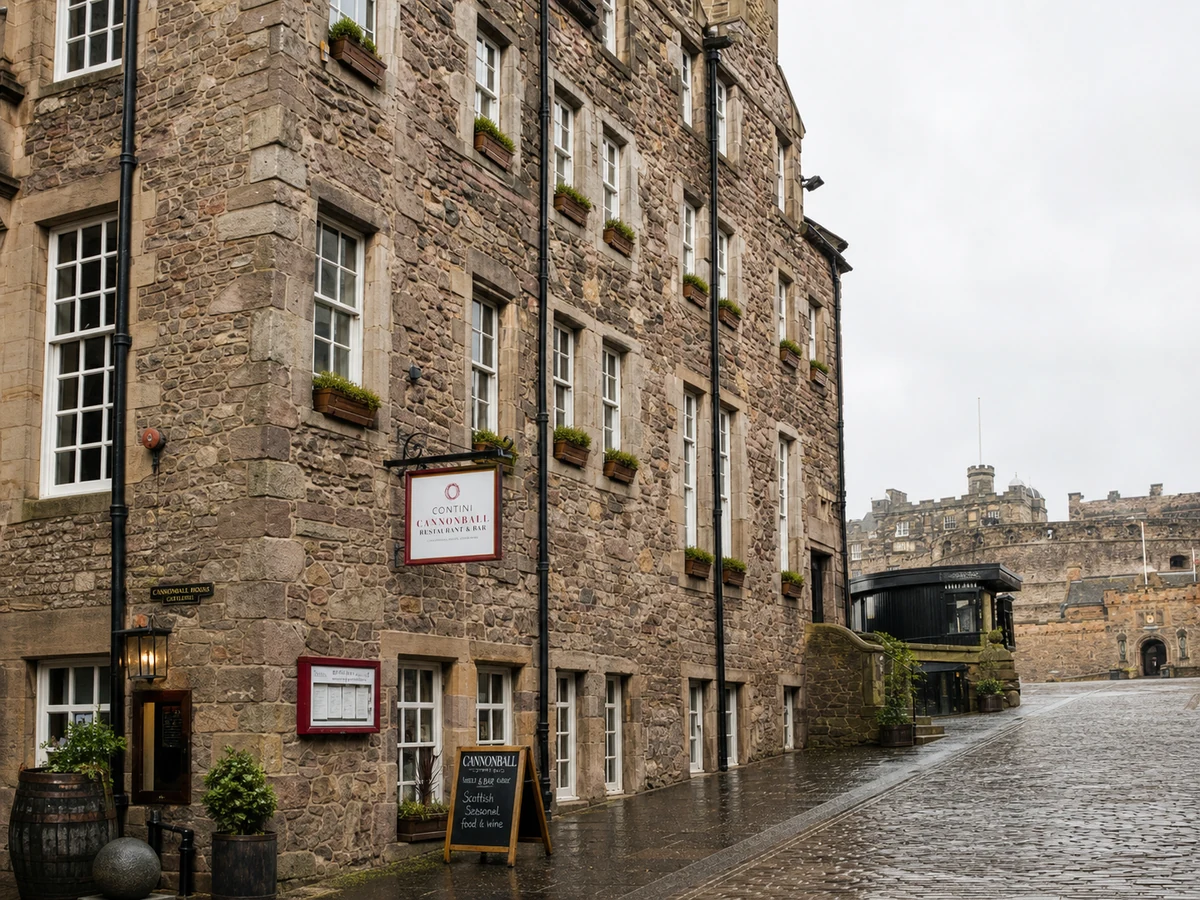
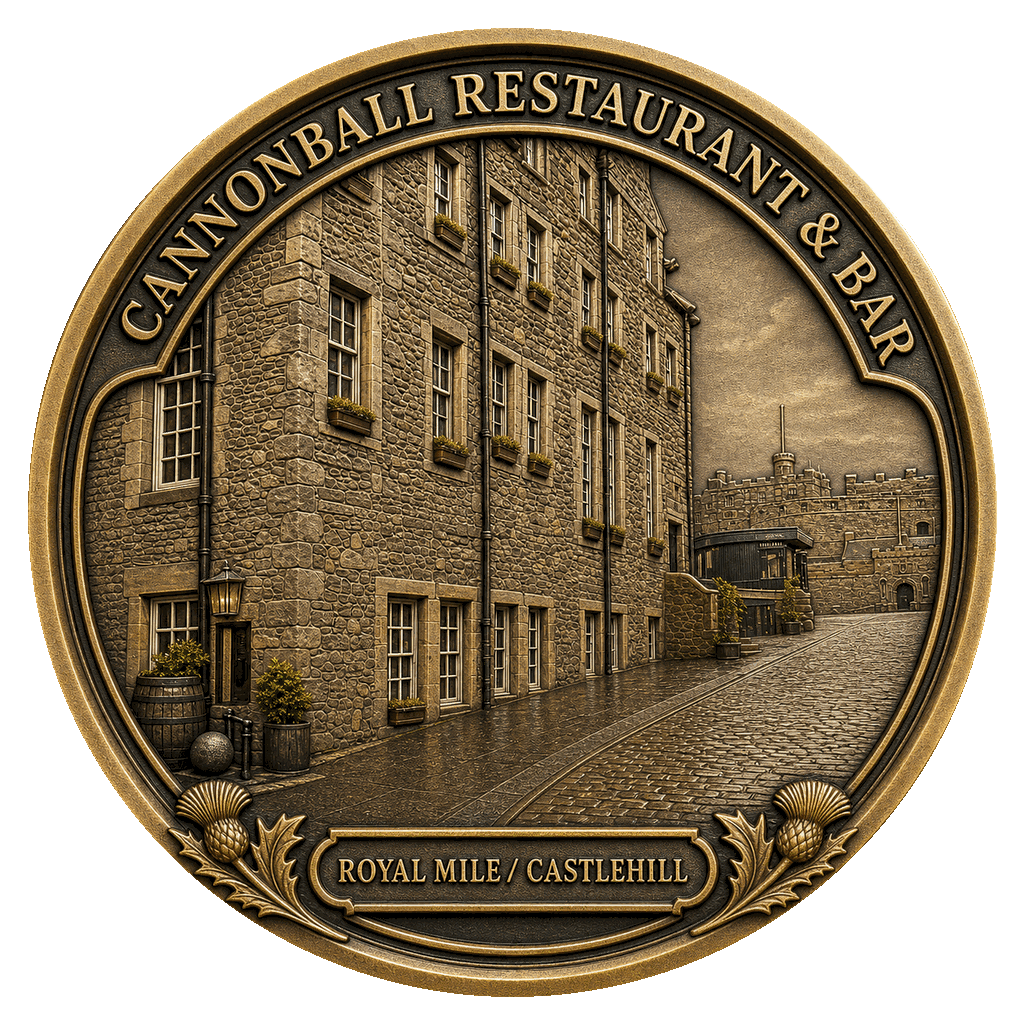
Cannonball Restaurant & Bar occupies Cannonball House at the Castlehill end of the Royal Mile, immediately below Edinburgh Castle. Its appeal rests on two distinct layers: a 17th-century merchant’s house, Category A listed since 1970, and Contini’s modern restaurant and whisky-bar operation, opened in 2014. The building gets its name from the cannonball embedded in the west gable, though Historic Environment Scotland says how it arrived is uncertain; it should not be repeated as proven siege history. Alexander Mure’s 1630 wing, eighteenth-century additions and the 1913 conversion into part of Castlehill School all belong to the house, not to the restaurant. For a drink with a view, plan carefully: the whisky bar is on the middle floor, while the top restaurant supplies the broad Castle and city outlook. Book upstairs if the panorama matters. This is heritage setting plus modern hospitality, not an old pub preserved unchanged.
What to notice
- 01
The whisky bar is on the middle floor; book the top restaurant if the panorama is essential.
- 02
The embedded cannonball’s origin is uncertain. Enjoy the feature without treating a siege story as fact.
- 03
Current bar drinks and bites are listed Tuesday. Saturday, 12:00-22:00; restaurant dining hours are narrower.
The time rail
The building, the pub and its interior may date from different periods. The timeline keeps documented dates separate from tradition.
The earliest part of Cannonball House is built on Castlehill.
Alexander Mure builds the lower south-west wing; his and Margaret Niellems’s initials are recorded on the attic-dormer pediment.
A bay and three nepus gables are added to Cannonball House.
John Carfrae incorporates Cannonball House into Castlehill School and reconstructs the interior as classrooms and offices.
Cannonball House is added to the statutory list at Category A.
An archaeological and structural watching brief records work at Cannonball House before its modern hospitality use.
Contini opens Cannonball Restaurant & Bar in the building.
Contini continues to operate the house over three floors, with a middle-floor whisky bar and top-floor restaurant views.
Sources & confidence
Historic Environment Scotland and City Council records anchor the building chronology and explicitly keep the cannonball’s origin uncertain. The current business, layout and hours are checked directly with Contini.
Research reviewed
- 356 Castlehill and 2 Castle Wynd North, Cannonball House (LB28491)Historic Environment Scotlandheritage
SupportsStatutory Category A record: early-17th-century fabric, 1630 Mure wing, mid-18th-century additions, 1913 school conversion, 1970 listing and the uncertainty around the embedded cannonball.
- Pre-1750 Buildings in Edinburgh Old Town Conservation AreaCity of Edinburgh Councilgovernment
SupportsCouncil conservation-area record identifying Cannonball House as a 17th-century merchant’s house and noting the embedded cannonball and 1913 school extension.
- Cannonball House, 356 Castlehill, Edinburgh: Archaeological and Structural Watching BriefAOC Archaeology / Archaeology Data Servicearchive
Supports2013 archaeological and structural report for Cannonball House.
- About CannonballContiniofficial
SupportsCurrent operator’s 2014 opening date and the restaurant/bar’s Castlehill location and whisky-led character.
- Private Dining at Cannonball HouseContiniofficial
SupportsCurrent three-floor layout: top-floor restaurant views, middle-floor whisky bar and lower-ground private-dining room.
- Edinburgh restaurants and bars with a viewForever Edinburgheditorial
SupportsCity tourism guide corroborating the top-floor Castle view and three-floor layout.